Wellness
Gut Health 101: Fermented Foods You Can Find Locally
From Bishop Arts kimchi to Deep Ellum kombucha, Dallas has quietly built one of the most fermented-food-friendly food scenes in Texas.
4 min read
Updated 3 h ago
Wellness
From Bishop Arts kimchi to Deep Ellum kombucha, Dallas has quietly built one of the most fermented-food-friendly food scenes in Texas.
4 min read
Updated 3 h ago
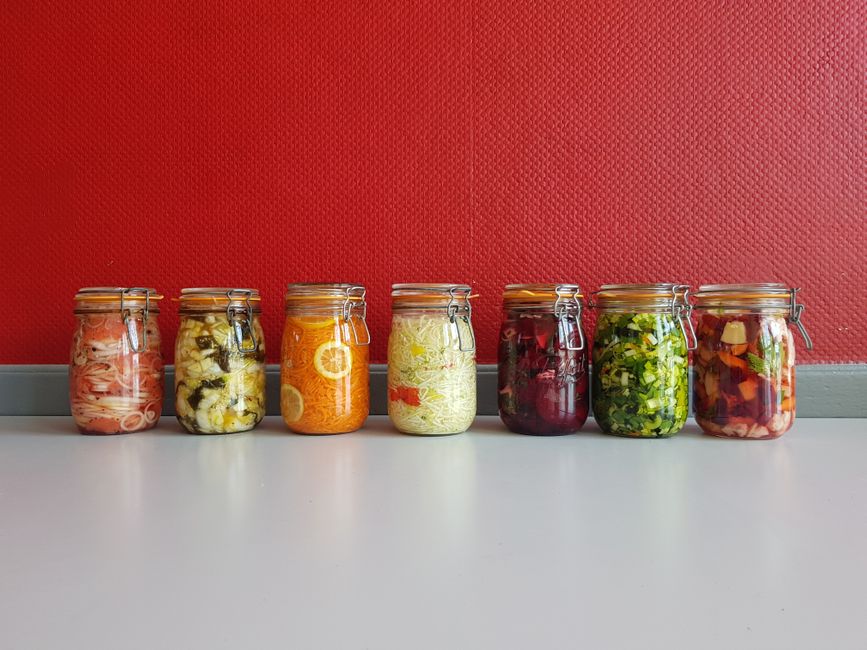
Sales of fermented foods in Texas jumped roughly 23 percent between 2023 and 2025, according to data from the Specialty Food Association, and Dallas-area grocery buyers say demand hasn't slowed. If you've noticed a wall of living cultures at your neighborhood Central Market or spotted a small-batch sauerkraut operation at the White Rock Local Market, you're watching a legitimate shift in how North Texans think about eating — and it starts, literally, in the gut.
The timing makes sense. Endocrinologists and gastroenterologists across the country have spent the last two years pushing gut microbiome research into mainstream conversation. Hormones, mood regulation, even sleep quality are now routinely discussed alongside digestive health. A diverse gut microbiome, supported by a steady intake of fermented foods, is increasingly what registered dietitians recommend as a foundation — not a supplement stack. Dallas, with its dense restaurant culture and a growing number of specialty producers, happens to be a good city to act on that advice.
Central Market on Lovers Lane in University Park carries one of the broadest fermented-food selections in the metroplex. The refrigerated cases hold at least a dozen varieties of kimchi — including options from Austin-based Farmhouse Culture and local producer Seoul Sisters, which launched its Dallas distribution in early 2025. Prices for a 16-ounce jar typically run $8 to $12. The store's cheese counter stocks raw-milk aged cheeses from Neal's Yard and a rotating selection of domestic producers, all of which carry live bacterial cultures. Raw cheese counts — the fermentation process that creates flavor also creates probiotics.
For kombucha specifically, Buda Juice in the Lower Greenville neighborhood has brewed small-batch kombucha on-site since 2019. A 16-ounce pour runs about $6. The brewing process there uses a continuous-batch method that tends to produce a more diverse SCOBY culture than mass-market brands. Staff can walk customers through the difference between first-ferment and second-ferment products, which matters: second-ferment kombucha, carbonated with added fruit juice, generally has lower sugar than the flavored commercial versions lining most supermarket shelves.
The White Rock Local Market, held most Saturdays at Winfrey Point near the lake, has become a reliable source for small-batch fermented vegetables. Several vendors there produce lacto-fermented carrots, beets, and classic dill pickles — the kind made without vinegar, relying entirely on salt and beneficial bacteria to preserve and transform the vegetable. These raw, unpasteurized products carry live cultures that pasteurized grocery-store pickles do not. A pint typically goes for $7 to $9.
A 2021 Stanford University study published in Cell — one of the most cited gut health trials in recent years — found that a diet high in fermented foods increased microbiome diversity and reduced markers of inflammation in participants over a 17-week period. The effect was more pronounced than a high-fiber diet alone. The foods in that study included yogurt, kefir, fermented cottage cheese, kimchi, and kombucha. None of them required a prescription or a specialty supplement.
Kefir is worth singling out. It contains somewhere between 30 and 56 strains of bacteria and yeast depending on the culture — significantly more than most probiotic supplements, which typically list six to twelve strains. Promised Land Dairy, based in Floresville, Texas, distributes a full-fat kefir that appears in Kroger and Tom Thumb locations across Dallas for around $5.49 a quart. It's one of the more affordable entry points into fermented eating the region offers.
The practical starting point is simpler than most people expect. Pick two fermented foods, add them to what you're already eating, and give it six weeks. A tablespoon of kimchi alongside scrambled eggs costs almost nothing extra. A small pour of kefir blended into a morning smoothie adds protein and culture without changing the routine much. Consultion with a Dallas-based registered dietitian — the Texas Academy of Nutrition and Dietetics maintains a searchable directory at eatrightTexas.org — can help customize an approach based on individual digestive history. The foods themselves, though, are already at the Saturday market and on the shelf at Central Market. No overhaul required.

Wellness

Wellness

Wellness
Wellness
About this article
Published by The Daily Dallas
Spread the word
Daily brief
Free, in your inbox before 7am. Weekdays.
The Daily Network — local news across Australia